How Many Laser Hair Removal Sessions Do You Really Need?
One of the most common questions people ask before starting laser hair removal is, "How many sessions will I need?" The honest answer is that it depends on your skin type, hair texture, hormones, and the body area being treated. Most clients require between 6 and 12 sessions spaced several weeks apart to achieve significant, long-lasting hair reduction. At Pink Mink NYC, our specialists customize every treatment plan to your unique Fitzpatrick skin type so you get the best possible results, whether you are dealing with hormonal hair growth from PCOS or simply want smoother skin year-round.
How Laser Hair Removal Works
Laser hair removal is the process of using concentrated pulses of light to destroy hair follicles beneath the skin. The laser targets melanin (pigment) inside the follicle, heating it until the structure responsible for regrowth is disabled. This selective approach is called selective photothermolysis, and it is the scientific principle that allows lasers to damage follicles without harming surrounding tissue.
Because the treatment relies on pigment absorption, darker, coarser hair typically responds best. At Pink Mink NYC, Dr. Syed uses advanced laser systems calibrated to each client's skin tone for safe, effective results on all complexions.
Why Multiple Sessions Are Necessary
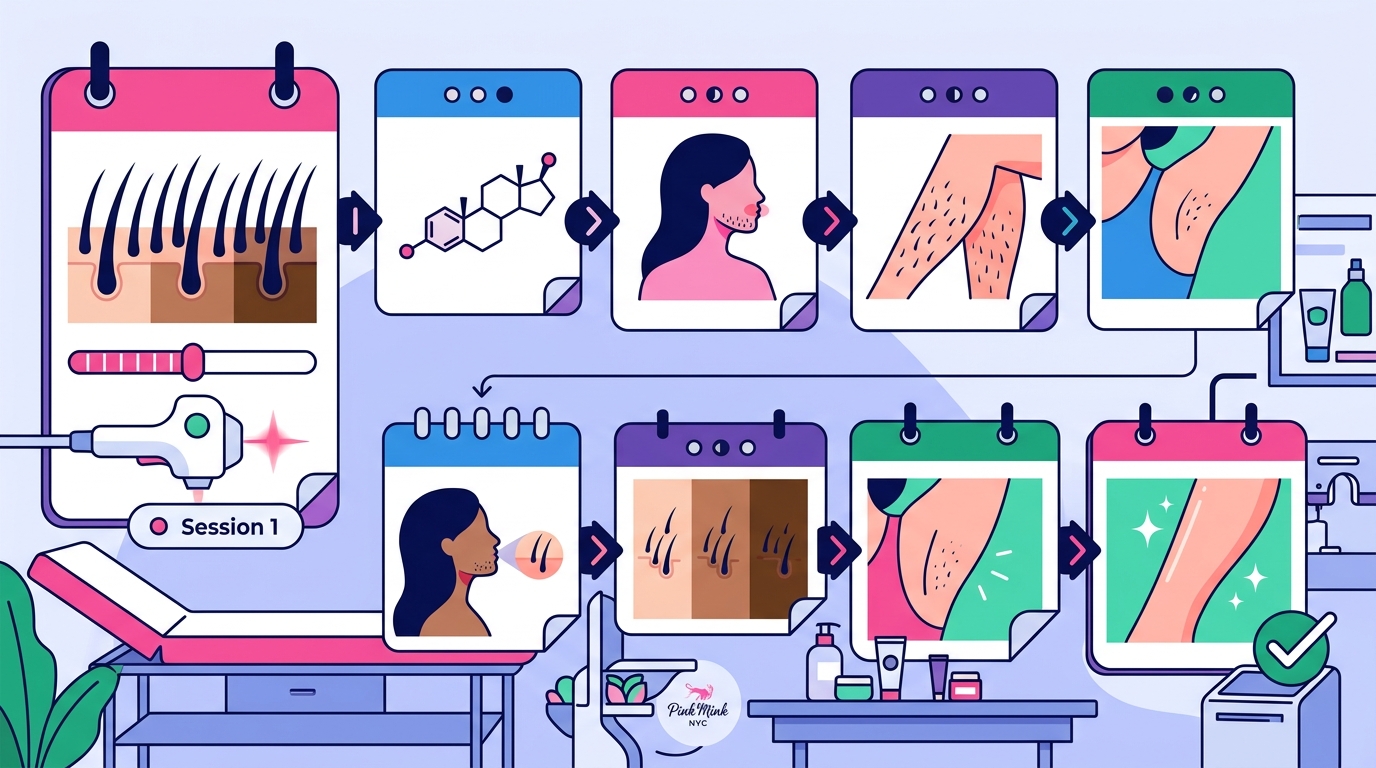
Hair grows in three distinct phases: anagen (active growth), catagen (transition), and telogen (resting). The laser is only effective on follicles in the anagen phase because that is when the hair shaft is still connected to the follicle and contains the most melanin. At any given time, only about 20 to 30 percent of your hair is in anagen.
This is why a single session cannot treat every follicle. Spacing treatments 4 to 6 weeks apart gives previously dormant hairs time to enter the active phase so the next session can target them. Research published in the Journal of Cutaneous and Aesthetic Surgery confirms that consecutive sessions delivered at 4 to 6 week intervals produce progressive hair reduction in skin types IV and V.
Session Counts by Body Area
The number of treatments varies depending on the body area. Hormonal zones like the face, underarms, and bikini line tend to require more sessions than non-hormonal areas like the legs and arms.
| Body Area | Typical Sessions Needed | Session Interval |
|---|---|---|
| Upper Lip & Chin | 8 – 12 | 4 – 6 weeks |
| Underarms | 6 – 10 | 4 – 6 weeks |
| Bikini / Brazilian | 6 – 10 | 4 – 6 weeks |
| Full Legs | 6 – 8 | 6 – 8 weeks |
| Arms | 6 – 8 | 6 – 8 weeks |
| Chest & Back (Men) | 8 – 12 | 6 – 8 weeks |
After completing an initial series, many clients achieve up to 80 to 90 percent hair reduction. Periodic maintenance sessions once or twice a year can keep regrowth minimal.
Factors That Affect How Many Sessions You Need
Skin Tone and Hair Color
The contrast between your skin and hair pigment influences how efficiently the laser can target follicles. Clients with dark hair and lighter skin often respond fastest. However, modern Nd:YAG lasers make safe treatment of darker skin tones possible when operated by experienced providers.
Hormonal Influences
Conditions such as PCOS (polycystic ovary syndrome) stimulate excess androgen production, which can cause thicker, more persistent hair growth. Hormonal areas like the face and bikini line may need additional sessions. Our team at Pink Mink NYC has treated over 3,000 clients of all skin and hair types, including many with hormonal conditions.
Genetics and Hair Density
Your genetic makeup determines baseline hair density and growth speed. Individuals with naturally dense, coarse hair may need sessions at the higher end of the range, while those with finer hair may finish sooner.
PCOS and Melanated Skin Considerations
PCOS is a hormonal disorder that often causes hirsutism, or excessive hair growth, particularly on the face, neck, and abdomen. PCOS clients frequently require 10 to 12 sessions or more because hormonal fluctuations can reactivate dormant follicles between treatments.
Melanated skin requires a laser wavelength and pulse duration that minimize epidermal damage while still reaching the follicle. The Nd:YAG 1064 nm laser is widely regarded as the safest option for Fitzpatrick skin types IV through VI. At Pink Mink NYC, every procedure is calibrated to your specific Fitzpatrick type, ensuring both safety and efficacy for melanin-rich complexions.
What to Expect During Your Treatment Plan
Your journey begins with a consultation where Dr. Syed evaluates your skin type, hair characteristics, and medical history. A personalized plan is created outlining the estimated number of sessions and the interval between them.
Each session is quick. Small areas like the upper lip take just a few minutes, while larger zones such as the legs may take up to 30 minutes. Most clients describe the sensation as a mild snap against the skin. Proper laser aftercare between sessions is essential for protecting the skin and maximizing results.
After roughly three to four sessions, you should notice a visible reduction in hair density and slower regrowth. By the end of your full treatment series, the remaining hair is typically finer, lighter, and far less noticeable.
Key Takeaways
- Most clients need 6 to 12 laser hair removal sessions for significant, lasting hair reduction.
- Hormonal areas (face, bikini, underarms) generally require more sessions than non-hormonal areas (legs, arms).
- Sessions are spaced 4 to 8 weeks apart to target hair in the active anagen growth phase.
- PCOS and other hormonal conditions may increase the total number of sessions needed.
- Melanated skin is safely treated with the right laser wavelength and an experienced provider.
- Maintenance sessions once or twice per year help sustain long-term smoothness.
- A personalized consultation is the best way to get an accurate session estimate for your body and goals.
Frequently Asked Questions
How many laser hair removal sessions does the average person need?
Most people need between 6 and 10 sessions for noticeable, long-lasting hair reduction. The exact number depends on the treatment area, skin type, and hair characteristics.
Why can't laser hair removal be done in one session?
Hair grows in cycles, and the laser only works on follicles in the active growth (anagen) phase. Because only 20 to 30 percent of hair is in anagen at any time, multiple sessions are required to catch every follicle.
How far apart should laser hair removal sessions be?
Sessions are typically spaced 4 to 6 weeks apart for facial and hormonal areas, and 6 to 8 weeks apart for body areas like the legs and arms.
Do people with PCOS need more laser sessions?
Yes. PCOS causes elevated androgen levels that stimulate persistent hair growth. Clients with PCOS often need 10 to 12 sessions or more, plus periodic maintenance treatments. Pink Mink NYC specializes in PCOS laser hair removal.
Is laser hair removal safe for dark skin tones?
Absolutely, when performed with the correct laser. The Nd:YAG 1064 nm laser is considered the gold standard for darker Fitzpatrick skin types. Pink Mink NYC's team are melanated skin specialists with extensive experience treating all complexions safely.
How long do laser hair removal results last?
After completing a full series, most clients enjoy 80 to 90 percent hair reduction that can last years. Annual maintenance sessions help manage any minor regrowth.
Does laser hair removal hurt?
Most clients describe the sensation as a quick, mild snap similar to a rubber band against the skin. Cooling technology built into modern lasers helps minimize discomfort.
What should I do between sessions?
Avoid waxing, plucking, and sun exposure between treatments. Shaving is permitted. Following your provider's aftercare guidelines protects your skin and supports better results.
Ready to Start Your Laser Hair Removal Journey?
Every client's hair and skin are different, which is why a personalized consultation is the first step toward smooth, long-lasting results. Book your free consultation at Pink Mink NYC today and let our specialists create a treatment plan tailored to your unique needs.