
If you are considering laser hair removal, one of the first questions on your mind is probably: how many sessions will it take? The answer depends on your skin type, hair color, hormones, and the area being treated. Most people need between 6 and 8 sessions to see significant, long-lasting hair reduction. In this guide, the specialists at Pink Mink NYC break down exactly what determines your session count and what you can realistically expect at every stage of treatment.
How Laser Hair Removal Works
Laser hair removal is a cosmetic procedure that uses concentrated light energy to target melanin (the dark pigment) inside hair follicles. The laser heats and damages the follicle, which inhibits its ability to produce new hair. However, the treatment is only effective when the follicle is in the anagen phase, or active growth stage.
The anagen phase is the period of the hair growth cycle when the follicle is actively producing a hair strand and contains the most melanin. Because only about 20 to 30 percent of your hair is in this phase at any given time, multiple sessions spaced weeks apart are essential to catch every follicle during its active window.
Average Number of Sessions Needed
According to the American Academy of Dermatology Association, each laser session results in roughly 10 to 25 percent hair reduction, and treatments are typically spaced 4 to 6 weeks apart. Most patients require 6 to 8 sessions to achieve optimal results, though hormonal areas like the face and bikini line may need 10 to 12 sessions.
After completing a full treatment course, studies show patients can experience up to 85 to 90 percent permanent hair reduction. Annual maintenance sessions, usually one to two per year, help address any dormant follicles that reactivate over time.
Factors That Affect Your Session Count
Hair Color and Texture
Dark, coarse hair absorbs laser energy most efficiently, which typically means fewer sessions. Fine or light-colored hair contains less melanin, making the laser less effective and often requiring additional treatments.
Skin Tone and Fitzpatrick Type
Your Fitzpatrick skin type is a classification system that categorizes skin by its response to UV exposure and its melanin content. At Pink Mink NYC's laser hair removal practice, every procedure is customized to your unique Fitzpatrick type. Darker skin tones require specialized laser wavelengths and settings to ensure safety and effectiveness.
Hormonal Influences
Hormonal conditions such as PCOS (polycystic ovary syndrome) stimulate excess hair growth, often requiring more sessions. Hormonal fluctuations from pregnancy or menopause can also reactivate treated follicles, meaning additional sessions may be needed down the road.
Sessions by Body Area
The number of treatments varies significantly depending on where on the body you are treating. Below is a general guide based on clinical recommendations:
| Treatment Area | Typical Sessions | Session Spacing | Category |
|---|---|---|---|
| Upper Lip / Chin | 6 - 10 | 4 - 6 weeks | Hormonal |
| Underarms | 5 - 8 | 4 - 6 weeks | Hormonal |
| Bikini / Brazilian | 6 - 12 | 4 - 6 weeks | Hormonal |
| Legs | 6 - 8 | 6 - 8 weeks | Non-Hormonal |
| Arms | 6 - 8 | 6 - 8 weeks | Non-Hormonal |
| Back / Chest | 6 - 10 | 6 - 8 weeks | Non-Hormonal |
Hormonal areas tend to need more sessions because fluctuating hormone levels continuously stimulate new follicle activity. Non-hormonal areas like the legs and arms generally respond faster and require fewer overall treatments.
PCOS and Melanated Skin Considerations
PCOS is a hormonal disorder that causes the body to produce excess androgens, leading to thicker, faster-growing hair on the face, chest, and abdomen. Clients with PCOS often need additional sessions beyond the standard 6 to 8 range, sometimes 10 to 14, along with periodic maintenance to manage regrowth driven by ongoing hormonal activity.
For clients with melanated (darker) skin tones, choosing the right provider is critical. Lasers that are not properly calibrated for higher Fitzpatrick types risk burns, hyperpigmentation, or ineffective results. Pink Mink NYC's team specializes in melanated skin and uses industry-leading laser technology to deliver safe, effective treatments across all skin tones.
What to Expect Session by Session
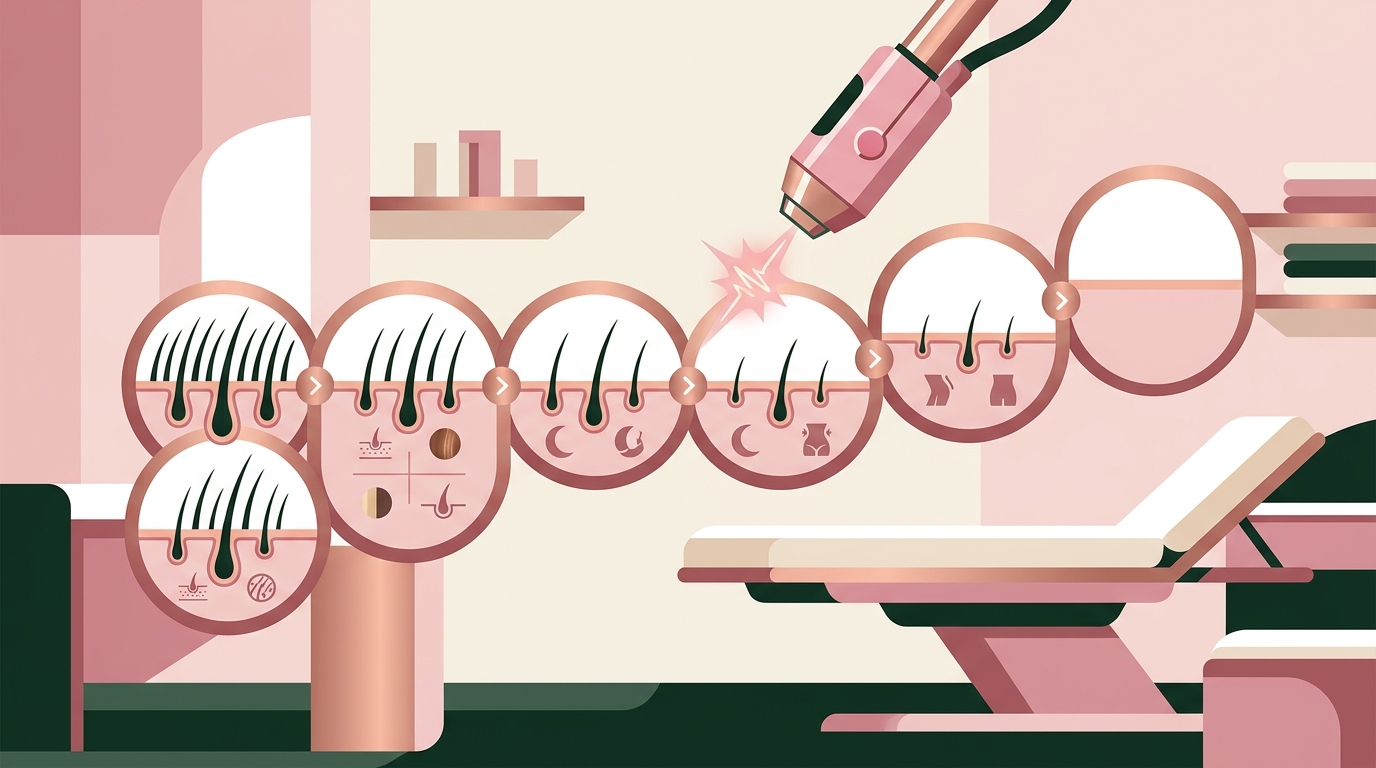
Sessions 1 - 2: You will notice hair shedding about 1 to 2 weeks post-treatment. Regrowth appears thinner and patchier. Some clients report dramatic early results.
Sessions 3 - 5: Hair density and thickness continue to decrease noticeably. The intervals between visible regrowth lengthen, and shaving frequency drops significantly.
Sessions 6 - 8+: Most clients reach 80 to 90 percent hair reduction. Remaining hairs are typically very fine and light. Your provider may recommend annual touch-ups. Following proper laser aftercare instructions between sessions will maximize your results.
Key Takeaways
- Most people need 6 to 8 laser hair removal sessions for significant, lasting results.
- Hormonal areas like the face, bikini, and underarms may require 10 to 12 sessions.
- Each session reduces hair by approximately 10 to 25 percent.
- Sessions should be spaced 4 to 8 weeks apart depending on the body area.
- PCOS and hormonal conditions can increase the total number of sessions needed.
- Melanated skin requires specialized laser settings for safe, effective treatment.
- Annual maintenance sessions (1 to 2 per year) help preserve long-term results.
Frequently Asked Questions
How many laser hair removal sessions does it take to be hair-free?
Most clients achieve 80 to 90 percent hair reduction after 6 to 8 sessions. Complete removal of every single hair is not guaranteed, but remaining hairs are usually very fine and barely visible.
Why can't laser hair removal be done in one session?
Hair grows in cycles, and the laser only works on follicles in the active anagen phase. Since only 20 to 30 percent of hair is in this phase at any time, multiple sessions are necessary to target all follicles.
How far apart should laser hair removal sessions be?
Sessions are typically spaced 4 to 6 weeks apart for facial and hormonal areas, and 6 to 8 weeks apart for body areas like the legs and arms. This spacing allows new hairs to enter the anagen phase.
Does PCOS require more laser hair removal sessions?
Yes. PCOS causes excess androgen production, which stimulates thicker, faster hair growth. Clients with PCOS often need 10 to 14 sessions plus periodic maintenance. Pink Mink NYC has extensive experience treating PCOS-related hair growth.
Is laser hair removal safe for dark skin?
Absolutely, when performed with the correct laser and settings. Pink Mink NYC uses advanced technology specifically calibrated for melanated skin, minimizing risks like hyperpigmentation and burns.
Do I need maintenance sessions after completing treatment?
Most providers recommend 1 to 2 maintenance sessions per year to address any dormant follicles that reactivate, especially in hormonal areas.
What happens if I miss a session?
Missing a session will not undo your progress, but it may slow your overall timeline. Staying on schedule ensures you are catching the maximum number of follicles in their active growth phase.
Can I shave between laser sessions?
Yes, shaving is the recommended hair removal method between sessions. Avoid waxing, plucking, or threading the treated area, as these methods remove the hair root that the laser needs to target.
Ready to Start Your Laser Hair Removal Journey?
Whether you are dealing with PCOS-related hair growth or simply want smooth, lasting results, the specialists at Pink Mink NYC are here to help. Our team customizes every treatment to your unique skin type and hair pattern across our Queens and Williston Park locations. Contact Pink Mink NYC today to schedule your consultation and find out exactly how many sessions you will need.