How Many Laser Hair Removal Sessions Do You Really Need?
If you are considering laser hair removal, one of the first questions on your mind is likely: how many sessions will it take? The short answer is that most people need six to eight sessions spaced four to six weeks apart for significant, long-lasting hair reduction. However, the exact number depends on your hair type, skin tone, treatment area, and hormonal factors like PCOS. In this guide, the team at Pink Mink NYC breaks down exactly what to expect so you can plan your treatments with confidence.
How Laser Hair Removal Works
Laser hair removal is a cosmetic procedure that uses concentrated light energy to target the melanin (pigment) inside hair follicles. When the laser energy is absorbed, it heats and damages the follicle enough to slow or stop future hair growth. This principle is known as selective photothermolysis.
Because the laser targets pigment, the treatment works best when there is strong contrast between hair color and skin tone. However, advances in laser technology, including Nd:YAG lasers, now allow safe and effective treatment across all Fitzpatrick skin types, including melanated skin.
Understanding the Hair Growth Cycle
The anagen phase is the active growth stage of the hair cycle, during which the follicle contains the highest concentration of melanin. This is the only phase when laser treatment is most effective. According to StatPearls (NCBI), the hair matrix is only sensitive to laser treatment during the anagen phase, making multiple sessions necessary.
Hair grows in three distinct phases: anagen (growth), catagen (regression), and telogen (rest). At any given time, roughly 85 to 90 percent of follicles are in anagen while 10 to 15 percent are in catagen or telogen. Since follicles cycle independently, each session targets only the currently active hairs. Successive sessions catch new follicles as they rotate into the growth phase.
Why You Cannot Treat All Hair in One Visit
Because only a fraction of hairs are laser-responsive at any moment, a single session will never eliminate all hair in a treatment area. Spacing sessions four to six weeks apart is strategically timed to coincide with new follicles entering the anagen phase, maximizing results over time.
How Many Sessions to Expect
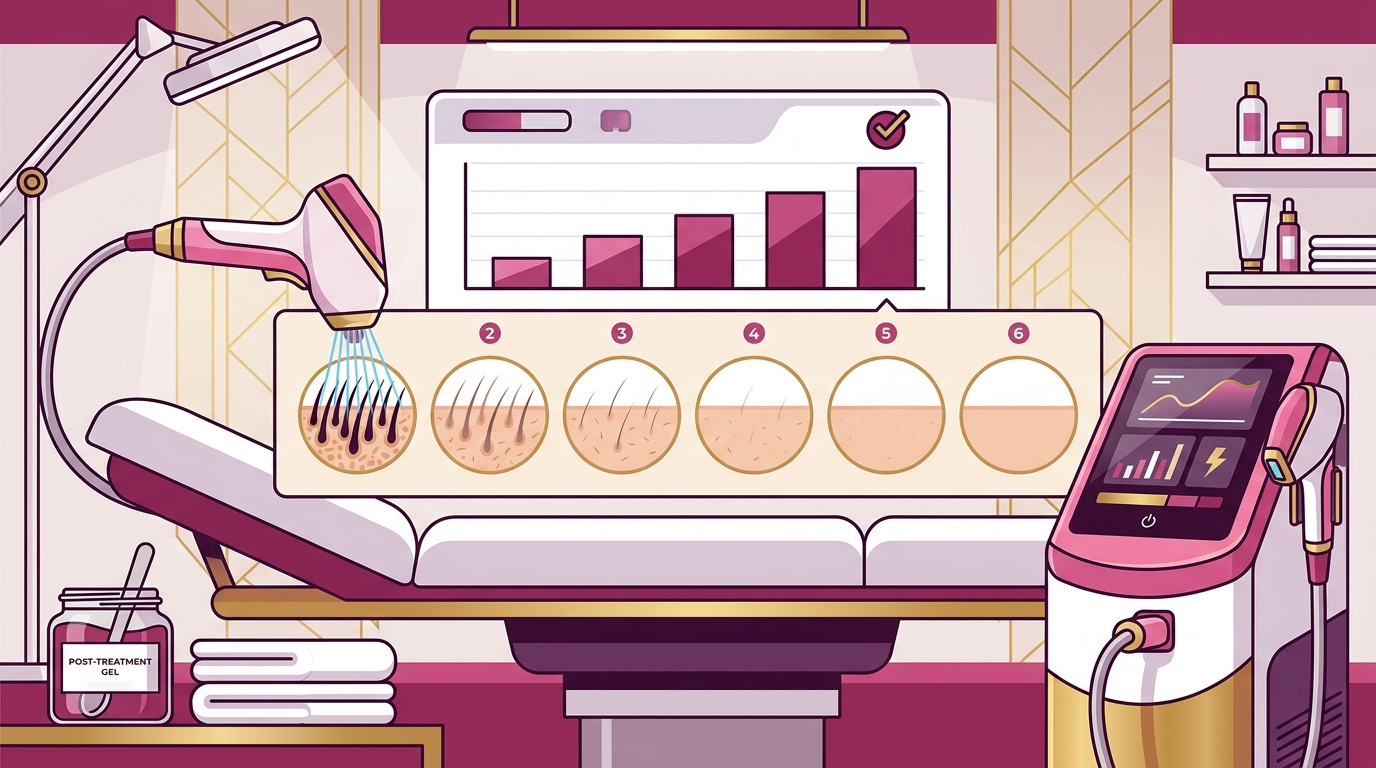
The clinical consensus is clear: most people need between six and eight laser hair removal sessions for effective, long-lasting hair reduction. According to NCBI's StatPearls resource, 4 to 6 sessions spaced 4 to 6 weeks apart are the minimum required to achieve adequate results, with maintenance treatments recommended every 6 to 12 months.
Research published in the Journal of Cosmetic and Laser Therapy reports long-term hair reduction ranging from 30 to 84 percent depending on the laser type used. Alexandrite lasers showed the widest range of efficacy at 35 to 84.25 percent reduction. These numbers explain why completing a full series of treatments is so important.
Sessions by Treatment Area
Different body areas have different hair densities, growth rates, and hormonal influences. The table below provides a general guide to how many sessions each area typically requires.
| Treatment Area | Typical Sessions | Session Interval | Notes |
|---|---|---|---|
| Upper Lip | 6 - 8 | 4 - 6 weeks | Hormonal area; may need touch-ups |
| Underarms | 5 - 7 | 4 - 6 weeks | Coarse hair responds well |
| Bikini / Brazilian | 6 - 10 | 4 - 6 weeks | Hormonal area; PCOS clients may need more |
| Legs | 6 - 8 | 6 - 8 weeks | Large area; slower growth cycle |
| Arms | 6 - 8 | 6 - 8 weeks | Non-hormonal; generally straightforward |
| Back / Chest | 6 - 10 | 8 - 12 weeks | Larger area; slower regrowth between sessions |
Hormonal areas such as the face, underarms, and bikini zone may require additional sessions because hormonal fluctuations can reactivate dormant follicles over time.
Factors That Affect Your Session Count
Hair Color and Thickness
Darker, coarser (terminal) hair absorbs more laser energy and responds best. Fine, light vellus hair contains less pigment and is more difficult to treat effectively, often requiring additional sessions.
Skin Tone and Fitzpatrick Type
The Fitzpatrick scale is a classification system that categorizes skin by its response to UV exposure. Clients with deeper skin tones need specific laser wavelengths, like the Nd:YAG, that bypass epidermal melanin to safely reach the follicle. At Pink Mink NYC, every procedure is carefully designed to fit your unique Fitzpatrick Skin Type.
Hormonal Influences
Conditions like polycystic ovary syndrome (PCOS) cause persistent, hormonally driven hair growth. While most people require 6 to 8 sessions, those with PCOS might need additional sessions or more frequent touch-ups to maintain results. Pink Mink NYC is a recognized PCOS laser hair removal specialist with over a decade of experience treating hormonal hair growth.
PCOS and Melanated Skin: Special Considerations
PCOS is a hormonal condition that affects up to 10 percent of women of reproductive age and often causes excess hair growth (hirsutism). According to a review published in the NIH's PMC, terminal hair responds better to laser treatment than vellus hair, and treatment must be extended for many months to cover follicles across multiple growth cycles.
For melanated skin, the risk of hyperpigmentation or burns is higher when the wrong laser type or settings are used. That is why choosing a provider who specializes in darker skin tones is critical. Dr. Syed and the Pink Mink NYC team have spent over a decade perfecting techniques for melanated skin, using advanced laser technology at their Queens and Williston Park locations.
Key Takeaways
- Most people need 6 to 8 laser hair removal sessions spaced 4 to 6 weeks apart for effective results.
- Laser hair removal only works on hair in the anagen (active growth) phase, which is why multiple sessions are required.
- Hormonal areas like the bikini, underarms, and face may require 10 or more sessions.
- PCOS clients often need additional sessions and ongoing maintenance due to hormonally driven regrowth.
- Melanated skin requires specialized laser wavelengths like Nd:YAG for safe and effective treatment.
- Annual maintenance touch-ups (1 to 2 per year) help sustain long-term smoothness.
- Choosing a specialist experienced with your skin type and hair concerns leads to the best outcomes.
Frequently Asked Questions
How many laser hair removal sessions does it take to be completely hair-free?
Complete hair-free results are rare from laser alone. Most clients achieve 80 to 90 percent permanent hair reduction after 6 to 8 sessions. Occasional maintenance sessions once or twice a year manage any fine regrowth.
Why do I need multiple laser sessions instead of just one?
Hair grows in cycles, and only follicles in the active anagen phase respond to the laser. Since only a portion of hair is in this phase at any time, multiple sessions are necessary to target all follicles as they cycle through growth stages.
How far apart should laser hair removal sessions be?
Sessions are typically spaced 4 to 6 weeks apart for facial and hormonal areas, and 6 to 8 weeks apart for larger body areas like the legs and back. This timing aligns with natural hair growth cycles.
Does PCOS require more laser hair removal sessions?
Yes. PCOS causes hormonally driven excess hair growth, which means more follicles may reactivate after treatment. Clients with PCOS often need 8 to 12 sessions plus periodic maintenance. Pink Mink NYC specializes in PCOS laser hair removal.
Is laser hair removal safe for dark or melanated skin?
Absolutely, when performed with the right equipment and expertise. Longer-wavelength lasers like the Nd:YAG safely bypass epidermal melanin. Pink Mink NYC's staff specializes in melanated skin and customizes every treatment to the client's Fitzpatrick type.
What results will I see after my first session?
After your first session, treated hairs typically shed within 1 to 3 weeks. You will notice patchier, thinner regrowth. Each subsequent session builds on the last, progressively reducing hair density.
Can I shave between laser sessions?
Yes, shaving between sessions is perfectly fine and actually recommended. Avoid waxing, threading, or plucking the treatment area, as these methods remove the hair root that the laser needs to target.
How long do laser hair removal results last?
Results from a completed treatment series are long-lasting, often permanent for many follicles. Some fine or hormonally influenced hair may regrow over months or years, which is why 1 to 2 annual maintenance sessions are suggested.
Ready to Start Your Laser Hair Removal Journey?
Whether you are dealing with PCOS-related hair growth, want smooth skin on melanated tones, or simply want to ditch the razor for good, Pink Mink NYC has the expertise to deliver results. With locations in Queens and Williston Park, NY, Dr. Syed's team offers personalized treatment plans for every skin type. Book your first laser session today and take the first step toward lasting smoothness.