One of the first questions every new client asks is: how many laser hair removal sessions will I actually need? The honest answer is that it depends on your hair type, skin tone, the treatment area, and whether hormonal conditions like PCOS are involved. Most people need between 6 and 10 sessions spaced several weeks apart. In this guide, the team at Pink Mink NYC breaks down exactly what determines your session count, what to expect at each stage, and how our specialists tailor every plan to your unique needs.
How Laser Hair Removal Works
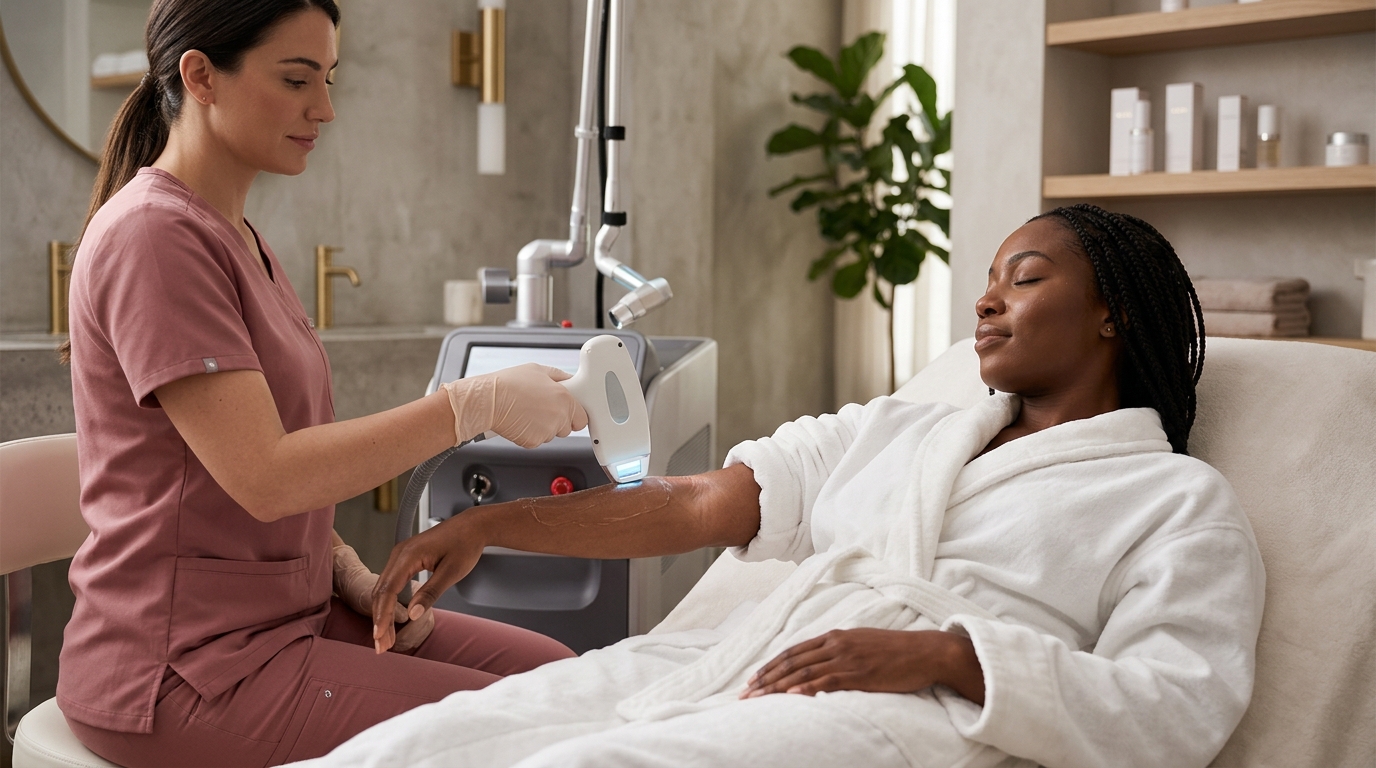
Laser hair removal is a cosmetic procedure that uses concentrated light energy to target and damage hair follicles beneath the skin. The laser beam is attracted to melanin, the dark pigment inside each hair root. When the follicle absorbs enough energy, it becomes unable to produce new hair growth.
Because the laser relies on pigment contrast between your hair and skin, results vary based on your Fitzpatrick skin type. At Pink Mink NYC, every procedure is calibrated to your individual skin tone, which is especially important for clients with deeper complexions.
Why Multiple Sessions Are Necessary
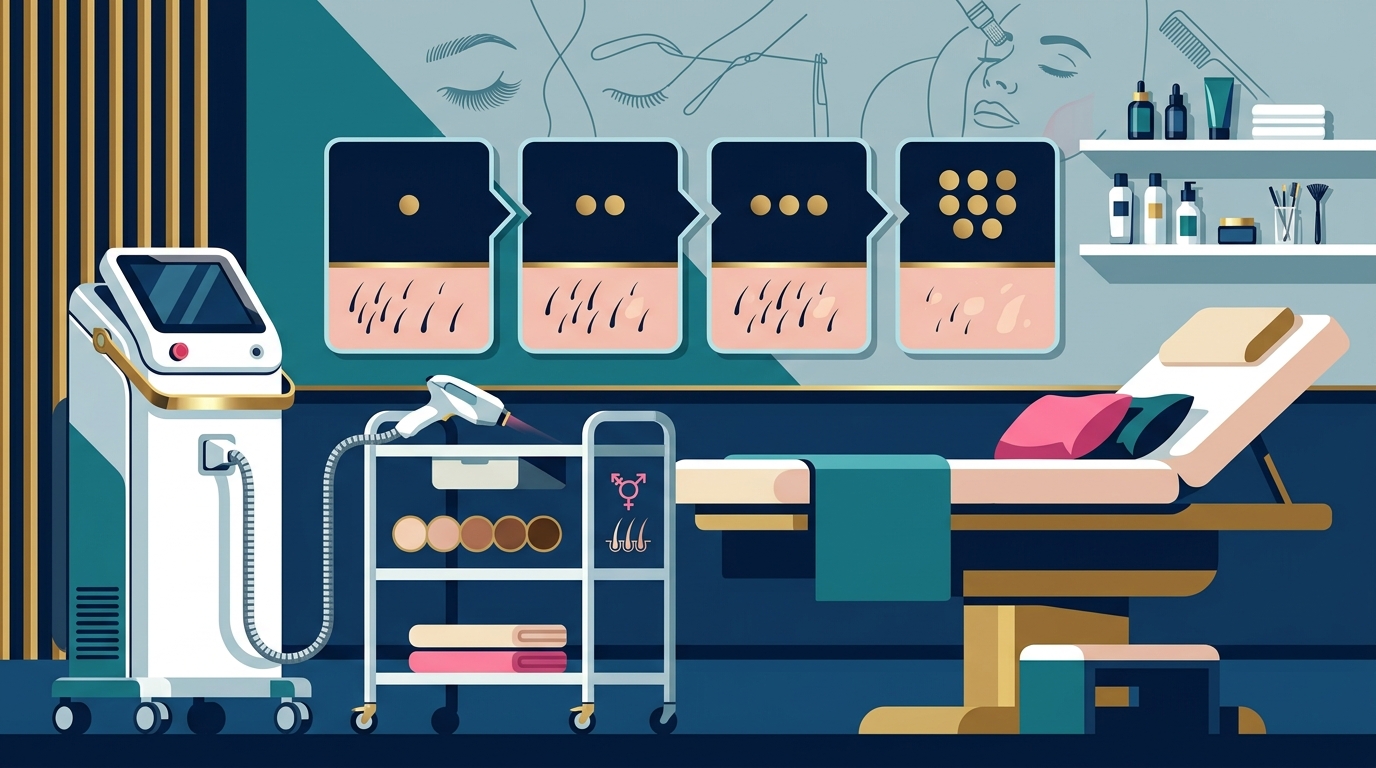
Hair does not grow all at once. Each follicle cycles through four phases: anagen (active growth), catagen (regression), telogen (rest), and exogen (shedding). Laser hair removal is only effective during the anagen phase, when melanin is concentrated in the follicle.
At any given moment, only about 15 to 20 percent of hairs are in the anagen phase. That means a single session can only treat a fraction of the total hair in a given area. Spacing sessions 4 to 8 weeks apart allows your provider to catch new follicles as they enter the growth phase, gradually reducing overall hair density with each visit.
Average Number of Sessions by Body Area
The number of sessions varies depending on whether an area is hormonally influenced and how dense the hair is. Below is a general guideline based on industry data:
| Treatment Area | Estimated Sessions | Typical Interval |
|---|---|---|
| Upper Lip / Chin | 6 - 8 | Every 4 - 6 weeks |
| Full Face | 8 - 10 | Every 4 - 6 weeks |
| Underarms | 6 - 8 | Every 4 - 6 weeks |
| Bikini / Brazilian | 6 - 10 | Every 4 - 6 weeks |
| Arms | 5 - 8 | Every 6 - 8 weeks |
| Legs | 6 - 8 | Every 6 - 8 weeks |
| Back / Chest | 6 - 10 | Every 8 - 10 weeks |
Hormonal areas such as the face, underarms, and bikini line often require more sessions because hormones can stimulate new follicle activity even after treatment. Non-hormonal areas like the legs and arms typically respond faster.
Key Factors That Affect Your Session Count
Hair Color and Texture
Dark, coarse hair absorbs laser energy most efficiently, often leading to quicker results. Lighter or finer hair may require additional sessions because there is less melanin for the laser to target.
Skin Tone
The Fitzpatrick Scale is a classification system that categorizes skin by its response to UV exposure. Clients with deeper skin tones need a provider experienced in adjusting wavelength and energy settings to ensure both safety and effectiveness. Pink Mink NYC's staff specializes in melanated skin, using protocols designed for every Fitzpatrick type.
Hormonal Conditions
Conditions such as polycystic ovary syndrome (PCOS) can drive excess hair growth, meaning more sessions and periodic maintenance may be needed. A personalized consultation helps set realistic expectations from the start.
PCOS and Melanated Skin Considerations
PCOS is a hormonal disorder that affects up to 12 percent of women of reproductive age, according to the CDC. One of its most visible symptoms is hirsutism, or excess hair growth on the face, chest, and back. Clients with PCOS often need 10 or more sessions plus annual maintenance visits to manage regrowth driven by ongoing hormonal fluctuations.
For clients with melanated skin, choosing the right laser wavelength is critical. Longer wavelengths like the Nd:YAG (1064 nm) penetrate deeper while bypassing surface melanin, reducing the risk of hyperpigmentation. At Pink Mink NYC, Dr. Syed's groundbreaking laser technique is specifically designed for safe and effective treatment on darker skin tones.
What to Expect During Your Treatment Plan
Your journey starts with a one-on-one consultation at either our Queens or Williston Park location. During this visit, your technician evaluates your skin type, hair density, medical history, and goals to build a custom treatment schedule.
After each session you may notice mild redness that typically subsides within 24 hours. Treated hairs shed over the following one to three weeks. You should avoid sun exposure and always apply SPF 30 or higher between appointments. Shaving is fine between sessions, but waxing, tweezing, and bleaching should be avoided because the follicle must remain intact for the laser to work.
Most clients see noticeable thinning after two to three sessions. By the sixth session, many experience up to 80 percent hair reduction. Periodic maintenance visits once or twice a year help keep results lasting.
Key Takeaways
- Most people need 6 to 10 laser hair removal sessions for significant, long-lasting results.
- Hormonal areas like the face, underarms, and bikini line typically require more sessions than the legs or arms.
- The laser only targets hair in the anagen (active growth) phase, which is why multiple sessions are essential.
- Dark, coarse hair responds fastest; lighter or finer hair may need extra treatments.
- PCOS and other hormonal conditions can increase your total session count and require ongoing maintenance.
- Melanated skin requires specialized wavelengths and an experienced provider to avoid complications.
- A personalized consultation is the best way to get an accurate session estimate for your body.
Frequently Asked Questions
How many laser hair removal sessions does a Brazilian require?
A Brazilian typically requires 6 to 10 sessions. Because the bikini area is hormonally influenced, some clients may need additional maintenance treatments after completing their initial series.
Can I see results after just one session?
Yes. Most clients notice a 10 to 25 percent reduction in hair after their first treatment. However, full results require the complete series of sessions to target follicles across all growth phases.
How far apart should sessions be scheduled?
Sessions are usually spaced 4 to 6 weeks apart for hormonal areas (face, underarms, bikini) and 6 to 8 weeks apart for non-hormonal areas (legs, arms, back). Your provider will recommend the ideal interval for your treatment plan.
Does laser hair removal work on darker skin tones?
Absolutely. With the right laser technology, such as the Nd:YAG wavelength, laser hair removal is both safe and effective on melanated skin. Pink Mink NYC specializes in treating all Fitzpatrick skin types.
Will PCOS affect how many sessions I need?
Yes. PCOS causes hormonally driven hair growth that can require 10 or more initial sessions plus annual maintenance. Working with a PCOS laser hair removal specialist ensures your treatment plan accounts for hormonal factors.
Is there downtime after each session?
There is no significant downtime. You may experience mild redness or sensitivity for a few hours. Most clients return to normal activities immediately after their appointment.
How long do laser hair removal results last?
After completing your full treatment series, results can last months to years. Hair that does regrow is typically much finer and lighter. One to two maintenance sessions per year help preserve long-term smoothness.
What should I avoid before my appointment?
Avoid waxing, tweezing, and bleaching for at least four weeks before treatment. Shave the area 24 hours prior to your session. Minimize sun exposure and skip self-tanners in the weeks leading up to your appointment.
Ready to Start Your Hair-Free Journey?
Every treatment plan at Pink Mink NYC is built around your unique skin type, hair texture, and goals. Whether you are managing PCOS-related hair growth or simply tired of shaving, our specialists will create a custom roadmap to smooth, lasting results. Book your free consultation at our Queens or Williston Park clinic today and take the first step toward care-free skin.