
If you are considering laser hair removal—whether at Pink Mink NYC in Queens or Williston Park, or anywhere else—the number-one question on your mind is probably: how many sessions will I actually need? The honest answer depends on your body area, hair type, skin tone, and hormones. This ultimate guide breaks everything down so you can plan your treatment with confidence.
The Short Answer: 6 to 12 Sessions for Most People
Across the industry, the standard recommendation falls between 6 and 12 treatments depending on the area being treated. For non-hormonal zones like the legs and arms, 6 to 8 sessions typically deliver significant results. Hormonal areas—including the face, underarms, and bikini line—often require 10 to 12 sessions because hormones continuously stimulate new follicle activity.
According to Cleveland Clinic, most people need approximately six to eight laser hair removal treatments spaced about six to eight weeks apart, and they can expect a 10% to 25% reduction in hair growth after the very first treatment.
Why Multiple Sessions Are Non-Negotiable
Understanding the hair growth cycle explains why a single treatment will never be enough. Every hair follicle on your body cycles through four distinct phases:
- Anagen (Active Growth): The only phase when laser energy can effectively destroy the follicle. The hair contains the most melanin and is physically connected to the root.
- Catagen (Transition): The hair detaches from the follicle and stops growing.
- Telogen (Resting): The follicle lies dormant before shedding the old hair.
- Exogen (Shedding): The old hair falls out, making room for a new anagen strand.
At any given moment, only a portion of your hair follicles are in the anagen phase—estimates range from roughly 20% of body hair to as high as 85–90% on the face. Because the laser can only damage follicles during active growth, you need repeated treatments to catch every follicle at the right time.
Session Estimates by Body Area
Not all body parts respond the same way. Below is a practical breakdown based on widely reported clinical guidelines:
| Body Area | Typical Sessions | Session Spacing | Why It Varies |
|---|---|---|---|
| Upper Lip & Chin | 6–8 | 4–6 weeks | Fine hair, strong hormonal influence |
| Full Face | 8–10 | 4–6 weeks | Multiple hair textures, hormonal regrowth |
| Underarms | 6–8 | 4–6 weeks | Coarser hair, responds quickly to treatment |
| Standard Bikini | 6–8 | 4–6 weeks | Hormonal area with dense hair |
| Brazilian | 8–12 | 4–6 weeks | Larger coverage, sensitive hormonal zone |
| Arms | 6–8 | 6–8 weeks | Finer hair may need extra passes |
| Legs (Full) | 6–8 | 6–8 weeks | Large surface area, slower growth cycle |
| Back & Chest | 6–10 | 6–8 weeks | Thicker, coarser hair common in men |
At Pink Mink NYC, many clients report visible results in as few as two to three sessions thanks to Dr. Syed's specialized technique, though completing a full treatment series is still recommended for lasting smoothness.
Five Factors That Influence Your Session Count
1. Hair Color and Thickness
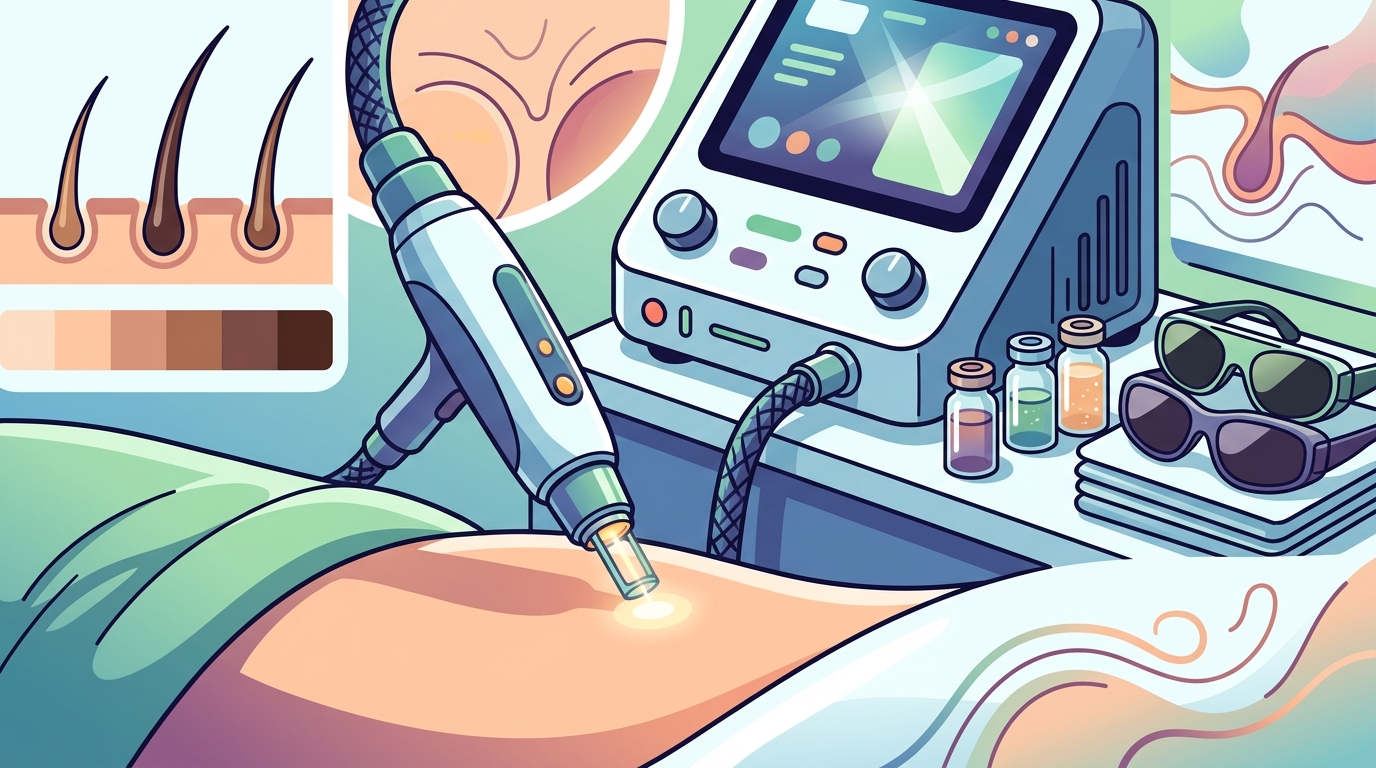
Laser energy targets melanin, the pigment inside the hair shaft. Dark, coarse hair absorbs more laser energy and responds faster. Lighter, finer hair may require additional treatments. Blonde, red, gray, or white hair contains minimal melanin and can be especially challenging for standard laser systems.
2. Skin Tone and Fitzpatrick Type
Modern laser technology—including the Cynosure systems used at Pink Mink NYC—can safely treat a wide variety of skin tones. However, practitioners need to calibrate wavelength and energy settings carefully for darker skin to avoid hyperpigmentation. This is why choosing a provider who specializes in melanated skin is so important. Pink Mink NYC has built its reputation on expertise with all Fitzpatrick skin types, making them a go-to destination in New York for clients with deeper complexions.
3. Hormones and Medical Conditions
Conditions like polycystic ovary syndrome (PCOS), thyroid disorders, and hormonal fluctuations from pregnancy or menopause can stimulate new hair growth even after treatments. Clients with PCOS may need additional sessions and more frequent maintenance. Pink Mink NYC specifically highlights their experience treating clients with PCOS, offering tailored treatment plans that account for ongoing hormonal stimulation.
4. Treatment Area
As shown in the table above, hormonally influenced areas (face, bikini, underarms) generally demand more sessions and shorter intervals than non-hormonal areas (legs, arms, back).
5. Laser Technology
Different laser platforms produce different results. Alexandrite, diode, and Nd:YAG lasers each have strengths depending on skin type and hair color. The type of device your provider uses will influence both effectiveness per session and total sessions needed.
What to Expect Session by Session
Here is a realistic timeline of what happens across a typical treatment series:
- Session 1–2: You may notice patchy shedding 1–3 weeks after treatment. Expect roughly 10–25% reduction. Hair that regrows will often look thinner.
- Session 3–4: Noticeable reduction becomes visible. Shaving frequency drops significantly. Many Pink Mink NYC clients report dramatic improvement around this stage.
- Session 5–6: Most non-hormonal areas are approaching 70–80% reduction. Remaining hair is sparse and fine.
- Session 7–10+: For hormonal areas or stubborn hair, these final sessions target the last active follicles. You are approaching your maximum reduction.
Maintenance Sessions: The Long Game
Laser hair removal is FDA-approved as a permanent hair reduction method, not permanent hair removal. After completing your initial series, most clients enjoy smooth skin for months or even years. However, some regrowth can occur—especially in hormonal areas.
Periodic maintenance sessions (typically once or twice a year) keep results looking their best. These touch-up visits are much quicker and less intensive than initial treatments. Pink Mink NYC offers a lifetime guarantee with 100% satisfaction, which gives clients peace of mind that maintenance is always covered.
How to Maximize Results and Minimize Sessions
Smart preparation and aftercare habits can help you get the most out of every visit:
- Shave, don't wax: Shave the treatment area 1–2 days before your appointment. Never wax, tweeze, or use depilatory creams between sessions—these remove the root that the laser needs to target.
- Avoid sun exposure: Tanned or sunburned skin increases the risk of side effects and can reduce laser efficacy. Wear SPF 30+ daily on treated areas.
- Skip certain supplements: Biotin and collagen supplements may stimulate hair growth and work against your progress.
- Stay on schedule: Consistent spacing between sessions ensures you catch follicles during the anagen phase. Missing appointments can extend your overall treatment timeline.
- Follow aftercare instructions: Use gentle, fragrance-free moisturizers. Avoid hot baths, saunas, and harsh exfoliants for 48 hours post-treatment. Cool compresses or aloe vera can soothe any temporary redness.
Laser Hair Removal for Melanated Skin: What You Should Know
Historically, laser hair removal was most effective on light skin with dark hair because older technology relied heavily on the contrast between skin and hair pigment. Modern Nd:YAG and advanced diode lasers have changed the landscape entirely, making safe and effective treatment available for all skin tones.
That said, provider expertise matters enormously. A practitioner experienced with darker Fitzpatrick types will select the right wavelength, pulse duration, and cooling settings to maximize hair destruction while protecting surrounding skin. Pink Mink NYC has made this their specialty—every procedure is designed around your unique Fitzpatrick Skin Type, with staff who have a decade of experience treating melanated skin safely and effectively.
Pink Mink NYC: Why New Yorkers Trust Dr. Syed
With two convenient locations—178-21 Hillside Ave in Jamaica, Queens and 209 Hillside Ave in Williston Park—Pink Mink NYC has spent over a decade refining their approach to laser hair removal. Key differentiators include:
- PCOS and melanated skin expertise: Tailored treatment protocols for clients who are underserved by generic clinics.
- Advanced Cynosure technology: Clinical-grade lasers that deliver precise energy for faster results.
- Rapid visible results: Many clients see significant reduction in as few as three sessions.
- Lifetime satisfaction guarantee: Maintenance is built into the promise, so your investment is protected.
- Full-service beauty destination: Beyond laser, Pink Mink offers lash extensions, brow services, HydraFacials, microneedling, and body treatments.
Ready to start? Book your first session at Pink Mink NYC or call (516) 307-8954 for the Williston Park location or (718) 791-6023 for Jamaica, Queens.
Key Takeaways
- Most people need 6 to 8 sessions for significant hair reduction on non-hormonal areas, and 10 to 12 sessions for hormonal areas.
- Sessions should be spaced 4–6 weeks apart for face and bikini, and 6–8 weeks apart for legs and arms.
- Hair growth cycles are the primary reason multiple sessions are required—the laser only works on follicles in the active growth phase.
- Skin tone, hair color, hormones, and the specific laser technology all influence your total session count.
- Annual maintenance sessions keep results smooth long-term.
- Choosing a provider experienced with your skin type—especially for melanated skin or PCOS—makes a significant difference in outcomes.
Frequently Asked Questions
How many laser hair removal sessions do most people need?
Most people need 6 to 8 sessions for significant reduction on areas like legs and arms. Hormonal zones such as the face, underarms, and bikini line may require 10 to 12 sessions for optimal results.
Why can't laser hair removal be done in one session?
Hair grows in cycles. The laser only destroys follicles during the active anagen growth phase. Since not all hairs are in this phase simultaneously, repeated sessions are necessary to target every follicle.
How far apart should laser hair removal sessions be spaced?
Sessions are typically scheduled every 4 to 6 weeks for hormonal areas like the face and bikini, and every 6 to 8 weeks for non-hormonal areas like the legs and arms. This timing aligns treatments with the hair growth cycle for maximum effectiveness.
Does skin tone affect how many sessions are needed?
Skin tone influences the laser settings used rather than the total number of sessions directly. Modern lasers such as the Nd:YAG safely treat all skin tones, but working with a provider experienced in melanated skin—like the team at Pink Mink NYC—helps ensure optimal results with minimal risk.
Is laser hair removal permanent?
Laser hair removal is classified by the FDA as permanent hair reduction. Most clients achieve up to 80% reduction in hair growth. Some regrowth may occur—particularly in hormonal areas—but it tends to be finer and lighter. Periodic maintenance sessions can sustain your results indefinitely.
Can people with PCOS get laser hair removal?
Absolutely. PCOS causes excess hair growth due to hormonal imbalance, but laser hair removal remains one of the most effective treatments. Clients with PCOS may need additional sessions and more frequent maintenance. Pink Mink NYC specializes in treating clients with PCOS and develops customized plans to address ongoing hormonal stimulation.
What should I do between sessions?
Shave as needed but avoid waxing, plucking, or threading. Protect treated areas from sun exposure with SPF 30 or higher. Skip biotin or collagen supplements that may stimulate regrowth. Follow any specific aftercare instructions provided by your technician.