
If you live with polycystic ovary syndrome, unwanted hair growth is likely one of the most visible and emotionally draining symptoms you face every day. Between 70–80% of women with PCOS experience hirsutism—excess hair on the face, chin, chest, and abdomen—driven by elevated androgen levels. Laser hair removal has emerged as one of the most effective long-term strategies for managing this symptom, and clinical research backs it up. Here is everything you need to know about the real benefits, realistic expectations, and practical considerations.
Why PCOS Causes Excess Hair Growth
PCOS is a hormonal disorder that elevates androgen levels in women, directly stimulating hair follicles to produce thicker, darker terminal hair in areas typically associated with male-pattern growth. The enzyme 5-alpha reductase, which is more active in PCOS patients, converts testosterone into dihydrotestosterone (DHT), which transforms fine vellus hairs into coarse terminal hairs. Once this transformation occurs, it is generally permanent—the hair does not revert to its finer state on its own.
This is precisely why temporary methods like shaving, waxing, and threading provide only fleeting relief. Women with PCOS often report spending significant time each week managing unwanted hair, which creates a cycle of frustration and emotional distress.
How Laser Hair Removal Targets Hormonal Hair
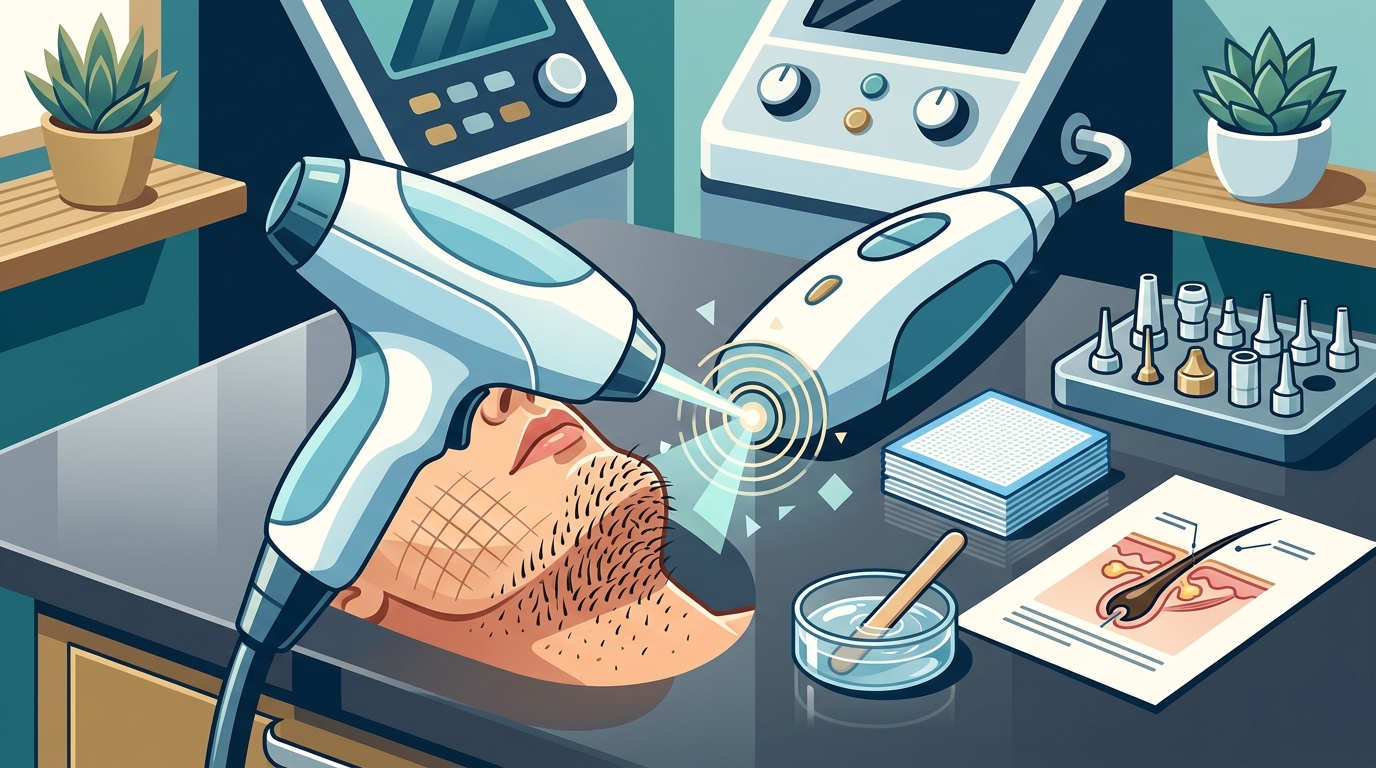
Laser hair removal uses concentrated light energy to target the melanin pigment within hair follicles. The light converts to heat, damaging the follicle and disrupting its ability to produce new hair. Because PCOS-related hair tends to be darker and coarser than average, it actually absorbs laser energy more efficiently, which can work in your favor during treatment.
However, lasers can only disable follicles that are in an active growth phase (anagen). At any given time, roughly 30% of hairs are in a resting phase, which is why multiple sessions spaced several weeks apart are essential for comprehensive results.
Seven Evidence-Based Benefits for PCOS Sufferers
1. Significant Reduction in Hair Density and Thickness
Research demonstrates that laser treatment achieves a 50–79% reduction in hair six months after a treatment series. Even for women with hormonal hair growth, treated hairs that do regrow are typically thinner and far less noticeable than before treatment.
2. Dramatic Time Savings in Daily Grooming
A landmark randomized controlled trial found that women with PCOS who received laser treatment reduced their weekly hair removal time from 112 minutes to just 21 minutes—an 81% decrease. The control group saw only a modest drop from 92 to 56 minutes over the same period.
3. Clinically Proven Reduction in Depression and Anxiety
The same trial documented that mean depression scores fell from 6.7 to 3.6 in the laser treatment group, compared to a much smaller decline in the control group. Separate clinical trials have confirmed that laser-assisted hair removal significantly improves quality of life scores and reduces depression in hirsute women.
4. Longer Hair-Free Intervals With Additional Sessions
A prospective study of 60 women with PCOS found that the mean hair-free interval increased from 1.9 weeks after six sessions to 4.3 weeks after ten sessions. This means more treatments directly translate into longer periods of smooth, hair-free skin.
5. Elimination of Ingrown Hairs and Skin Irritation
Unlike shaving and waxing, which often cause razor bumps, ingrown hairs, and folliculitis—especially on sensitive areas like the chin and bikini line—laser treatment targets the follicle itself. Over time, this dramatically reduces the skin irritation cycle that plagues many PCOS sufferers who rely on daily shaving.
6. Long-Term Cost Efficiency
While each laser session represents a higher upfront cost than a razor or wax strip, the cumulative lifetime spending on daily shaving products or regular waxing appointments far exceeds a series of laser treatments. For PCOS patients who would otherwise be managing hair removal for decades, laser offers a financially sensible path.
7. High Patient Satisfaction Despite Hormonal Challenges
Despite the fact that PCOS hair may require more sessions than non-hormonal hair, research shows that 95% of women with PCOS report satisfaction with their laser treatment results. The key is setting realistic expectations and committing to the full treatment course.
What Clinical Studies Say
Multiple peer-reviewed studies support laser hair removal for PCOS-related hirsutism:
- JAMA Dermatology 2024 Systematic Review: A systematic review of six studies covering 423 PCOS patients found that Alexandrite laser demonstrated significant improvements in hirsutism severity and psychological outcomes. The combination of diode laser with metformin or oral contraceptives produced superior results compared to laser alone.
- Randomized Controlled Trial (Clayton et al.): Self-reported facial hair severity in the laser group dropped from 7.3 to 3.6 on a 10-point scale over six months, compared to 7.1 to 6.1 in the control group—a statistically significant difference.
- Quality of Life Study (2023): A clinical trial published in the International Journal of Women's Health and Reproduction Sciences showed that laser-assisted hair removal significantly improved quality of life scores and reduced depression in hirsute females.
- Contemporary OB/GYN Report: Long-term studies have documented up to 90% reduction in hair growth at 19 months post-treatment.
Treatment Expectations for PCOS Patients
Because of the ongoing hormonal stimulation unique to PCOS, treatment plans differ from those for patients without hormonal conditions:
| Factor | Non-Hormonal Hair | PCOS Hair |
|---|---|---|
| Typical sessions needed | 6–8 | 8–12 |
| Hair reduction after series | 80–95% | 50–79% |
| Maintenance sessions | Rare | Every 6–12 months |
| Regrowth texture | Fine or none | Finer, lighter |
The initial treatment series delivers the most dramatic reduction. After that, periodic maintenance sessions manage any new growth triggered by ongoing androgen activity. Many women find that maintenance appointments once or twice a year are a small commitment compared to the daily grooming routine they replaced.
Combining Laser With Medical Therapy for Better Results
Research indicates that combining laser treatment with pharmacological management of PCOS produces superior outcomes. A 2024 systematic review found that the combination of diode laser with either metformin or combined oral contraceptive pills was more effective than laser treatment alone. This makes sense because addressing the hormonal root cause slows the activation of new follicles, while laser disables existing ones.
If you are not already working with an endocrinologist or gynecologist to manage your PCOS medically, starting that process alongside laser treatment can maximize your results. Anti-androgen medications like spironolactone may also complement your laser treatment plan.
Skin Tone Considerations and Melanated Skin
Historically, laser hair removal technology performed best on light skin with dark hair. Modern advancements have changed this significantly. Nd:YAG lasers (1064 nm wavelength) are specifically designed for darker skin tones and are highly effective for coarse, hormonal hair. Diode lasers with longer wavelengths and built-in cooling systems also serve a wider range of Fitzpatrick skin types safely.
At Pink Mink NYC, treating melanated skin is a core specialty. Dr. Syed and the team customize each treatment protocol based on your individual Fitzpatrick skin type, ensuring both safety and efficacy. Choosing a provider experienced with darker skin tones is critical to avoiding complications like hyperpigmentation or hypopigmentation.
How to Choose the Right Provider
Not all laser clinics have the expertise or equipment to treat PCOS-related hair growth effectively. Here is what to look for:
- Experience with hormonal hirsutism: Ask how many PCOS patients the provider has treated and what results they typically achieve.
- Medical-grade laser equipment: Ensure the clinic uses FDA-cleared devices such as Alexandrite, Diode, or Nd:YAG lasers—not just IPL devices, which research shows are less effective for PCOS.
- Customized treatment plans: A reputable provider will tailor settings based on your skin type, hair characteristics, and hormonal status rather than using a one-size-fits-all approach.
- Skin tone expertise: If you have darker skin, verify the provider has specific training and appropriate laser wavelengths for melanated skin.
- Transparent expectations: Be cautious of any clinic promising permanent, complete hair removal for PCOS. Honest providers will explain the need for maintenance sessions and realistic reduction percentages.
Key Takeaways
- Laser hair removal is clinically proven to reduce PCOS-related hirsutism by 50–79%, with regrowth that is finer and less noticeable.
- Randomized controlled trials show it reduces depression, anxiety, and weekly grooming time by over 80%.
- PCOS patients typically need 8–12 sessions (vs. 6–8 for non-hormonal hair) plus annual maintenance.
- Combining laser with hormonal management (metformin, oral contraceptives, or anti-androgens) produces the best outcomes.
- Modern laser technology, including Nd:YAG, safely and effectively treats all skin tones including melanated skin.
- Patient satisfaction among PCOS sufferers reaches 95% when adequate sessions are provided.
- Choose a provider with proven PCOS and skin-tone expertise—like Pink Mink NYC, which specializes in both.
Frequently Asked Questions
Does laser hair removal work for PCOS?
Yes. Multiple clinical studies confirm that laser hair removal effectively reduces unwanted hair growth caused by PCOS. While results may require more sessions than non-hormonal hair removal, research shows 50–79% hair reduction at six months and up to 90% at 19 months. Overall patient satisfaction is 95%.
How many laser sessions do PCOS patients need?
Most PCOS patients require 8–12 treatment sessions for optimal initial results, compared to the standard 6–8 sessions for non-hormonal hair. Periodic maintenance sessions every 6–12 months help manage new growth triggered by ongoing hormonal activity.
Is laser hair removal permanent for PCOS?
Laser hair removal provides long-term hair reduction rather than absolute permanent removal, particularly for PCOS patients. Treated follicles are disabled, but hormonal stimulation can activate dormant follicles over time. Maintenance sessions keep results consistent, and regrown hairs are typically much finer.
Can laser hair removal help with PCOS-related depression and anxiety?
Clinical research strongly supports this. A randomized controlled trial found that depression scores in the laser treatment group were cut nearly in half. Separate studies confirm significant improvements in quality of life and reduced anxiety following treatment.
Is laser hair removal safe for dark skin with PCOS?
Yes, when performed with the right equipment and expertise. Nd:YAG lasers are designed specifically for darker skin tones. It is essential to choose a provider experienced in treating melanated skin to minimize risks of pigmentation changes. Pink Mink NYC specializes in laser treatment for all skin tones.
Should I combine laser with medication for PCOS hair growth?
Research supports combining laser treatment with hormonal therapies such as metformin or oral contraceptives for superior results. Consult your gynecologist or endocrinologist about medical management alongside your laser treatment plan.
How much does laser hair removal cost for PCOS patients?
Costs vary by treatment area and provider, but because PCOS patients typically need more sessions, total investment is generally higher than average. However, compared to a lifetime of daily shaving or regular waxing, laser treatment is often more cost-effective in the long run. Some insurance companies may offer partial coverage when treatment is medically documented for hirsutism.